
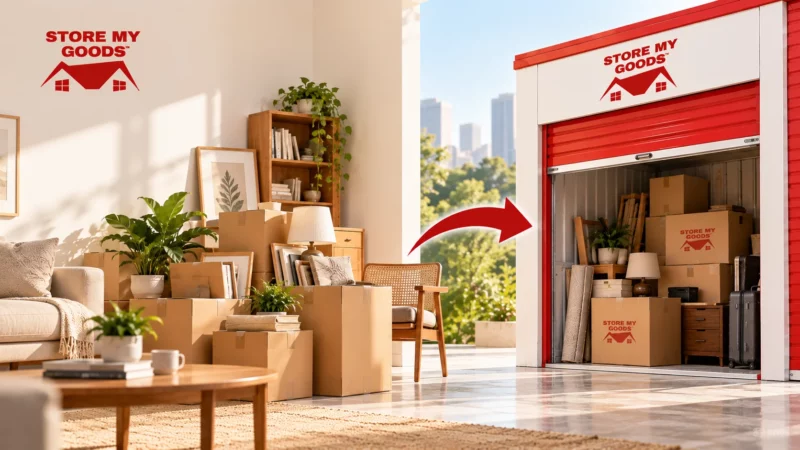
Retirement Downsizing in India: A Practical Guide to Moving to a Smaller Home
|
Quick answer: Downsizing after retirement works best in five steps: sort belongings into Keep, Store, Donate, and Discard piles; measure your new home before you move a single box; use professional storage instead of a bigger flat for sentimental or seasonal items; move in phases rather than all at once; and unpack gradually. This keeps the process from becoming overwhelming and lets you hold onto what matters without cluttering a smaller space. See the full step-by-step guide below, or get a storage quote in under 2 minutes. |
Retirement is meant to be a lighter chapter, more time, fewer obligations, but the home that once held a growing family often becomes harder to justify keeping. This shift is playing out across India at scale: the country’s senior population is projected to roughly double, from 10.5% of the population in 2022 to 20.8% by 2050, according to the UNFPA India Ageing Report 2023.
More retirees than ever will face the same question: how do you move into a smaller, more manageable home without losing the things that matter?
Why More Retirees in India Are Downsizing
- Maintenance burden: larger homes require more upkeep, repairs, and staff, all harder to manage without the energy or income of working years.
- Empty rooms, real costs: property tax, utilities, and maintenance on unused bedrooms add up regardless of how much space is actually used.
- Proximity to family or care: many retirees downsize specifically to move closer to children or healthcare facilities.
- Simplicity: less space to clean and organise means more time for the things retirement is meant to be for.
Step 1: Sort Belongings Into Four Piles
Before anything gets packed, sort every room into four categories. This single step prevents the most common downsizing mistake, packing everything and deciding later, which just relocates the clutter instead of resolving it.
| Pile | What Goes Here | What To Do With It |
| Keep | Daily-use furniture, essential documents, medication, everyday kitchenware | Moves with you to the new home |
| Store | Heirlooms, festive décor, photo albums, seasonal clothing, a spare bed for visiting family | Off-site storage, retrieved when needed |
| Donate | Clothes, furniture, or utensils in good condition you no longer use | Local charity, religious trust, or donation drive |
| Discard | Broken appliances, expired documents, anything beyond repair | Recycle or dispose responsibly |
Anything in the Store pile doesn’t need to be discarded to make the move work, it needs a secure, affordable place to live until it’s wanted again. This is where household storage earns its place in the plan.
Step 2: Plan the New Space Before You Move
Measure the new home’s layout before deciding what comes with you. Multi-functional furniture, beds with drawers, foldable dining tables, modular wardrobes, does more with less floor area. Vertical shelving reclaims wall space a smaller flat can’t spare. For a renovation-in-progress or a home not yet ready, temporary storage bridges the gap without a rushed decision on every box.
Step 3: Use Professional Storage Instead of a Bigger Home
A spare room to hold heirlooms and seasonal items usually costs far more in rent and maintenance than self-storage built for exactly that purpose. Doorstep pickup means furniture and boxes never need to be hauled anywhere; climate control and pest management protect items better than a spare cupboard would. For personal papers, property documents, and financial records that need long-term, organised storage, document storage keeps them retrievable without cluttering a drawer.
| “The families who downsize smoothly aren’t the ones who throw the most away, they’re the ones who separate ‘don’t need daily’ from ‘don’t need at all.’ A wedding album or a father’s old desk doesn’t have to compete with your new living room for space; it just needs somewhere safe to wait.” – Arjun Mehta, Storage Operations Head, Store My Goods | 8 years managing 100,000+ items stored monthly |
Step 4: Move in Phases, Not All at Once
Shifting an entire household in a single day is exhausting at any age, and unnecessary at this one. Move essentials first, send non-essentials into storage, and unpack gradually as the new home starts to feel settled. This phased approach reduces decision fatigue and physical strain, and it leaves room to change your mind about a few things along the way.
Step 5: Keep the New Home Simple and Spacious
Once settled, resist re-accumulating what you just cleared out. A clutter-free home is easier to host family in, easier to keep clean, and leaves more time for the parts of retirement that matter, reading, gardening, travel. With stored belongings retrievable within a couple of days through most providers’ apps, nothing valuable is truly out of reach, it’s just out of the way. Explore the full range of personal storage options to see what fits.
Frequently Asked Questions About Retirement Downsizing
How much storage space does a retiree typically need when downsizing?
Most retirees downsizing from a 3–4 BHK to a 1–2 BHK need 100–200 sq ft of storage, enough for a few furniture pieces, boxed heirlooms, and seasonal items. Confirm current per-sq-ft and per-box rates at storemygoods.com. A quick inventory of what’s going in the ‘Store’ pile is the easiest way to size this accurately.
Is it cheaper to store belongings or move into a slightly bigger flat?
For most retirees, storing the belongings you don’t use daily costs far less per month than the extra rent, deposit, and maintenance of a larger flat. Storage also doesn’t require a fresh lease negotiation or brokerage.
Can storage companies pick up furniture and boxes directly from my home?
Yes, doorstep pickup is standard with most tech-enabled storage providers, so heavy furniture and packed boxes don’t need to be moved to a facility yourself.
How do I decide what to keep versus what to store?
Sort belongings into four piles: Keep (used daily), Store (sentimental or seasonal, used a few times a year), Donate (good condition, no longer needed), and Discard (broken or unusable). Anything you haven’t touched in over a year, but aren’t ready to part with, usually belongs in Store.
Are stored belongings safe from damage and pests over several years?
Reputable facilities offer climate-controlled, pest-managed storage with 24/7 CCTV monitoring, which protects photo albums, wooden furniture, and fabric items far better than an unused room or a relative’s garage.
Can I retrieve a single stored item without unpacking everything?
With digitally catalogued storage, each box or item is tagged at pickup, so a single item, like a specific photo album or festival decoration, can be requested and delivered without disturbing the rest of your stored belongings.
Should I move everything at once or in phases?
A phased move, essentials first, non-essentials into storage, gradual unpacking, is generally easier on retirees than a single large move, reducing physical strain and decision fatigue on moving day.
Conclusion
Downsizing after retirement isn’t about giving up what matters, it’s about deciding what needs to be in daily view and what just needs to be kept safe. A clear sort, a measured plan, and the right storage partner turn an overwhelming move into a manageable one.
Explore household storage plans or get a free quote in under 2 minutes.



 A-23, A-Block, Sector 83, Noida Pin Code - 201305
 +91 9311806600
 contact@storemygoods.in
 Hours: 9:30AM - 8:00PM
No Comment