
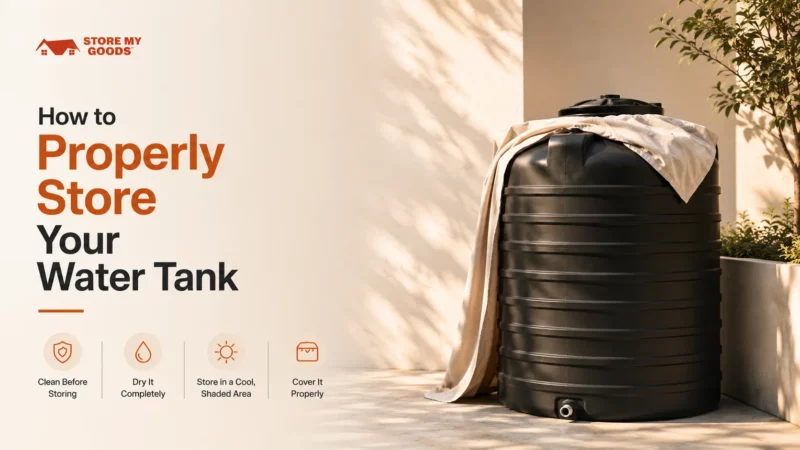
How to Properly Store Your Water Tank: Best Practices for Homeowners
|
Quick answer: Clean the tank in five steps before putting it away – drain, scrub, rinse, disinfect, and air-dry – then seal every opening and store it on an elevated stand in a shaded, covered spot. Inspect every three months even while idle, and re-run the cleaning cycle before refilling after extended storage. If you do not have a suitable covered space at home, managed household storage starts from ₹499/month with doorstep pickup included. |
Storing a water tank safely and hygienically is crucial for maintaining water quality and protecting your health. Proper water tank storage ensures clean, uncontaminated water whenever you need it. Whether you’re renovating, relocating, or simply want to prepare for seasonal changes, follow these best practices to store your water tank safely in India. This guide covers cleaning steps, storage location tips, risk mitigation (algae, dust, pests, weather), and long-term maintenance.
Importance of Safe and Clean Water Tank Storage
Safe storage prevents contamination and health hazards. Clean, well-maintained tanks guard against waterborne diseases like diarrhoea or cholera by keeping water free of bacteria, algae, and debris. A properly stored tank also gives you a reliable supply of potable water during shortages, emergencies, or seasonal breaks. An unmaintained tank, by contrast, can harbour algae and bacteria that cause foul odour or taste, and can suffer structural damage over time. Regular care extends the tank’s lifespan and keeps every drop safe to use.
Key Point: Clean water storage tanks regularly and seal them tightly. This prevents contamination and preserves hygiene.
Cleaning and Preparing Your Water Tank Before Storage
Before storing an empty tank, give it a thorough cleaning. Follow these steps to prepare the tank:
- Drain Completely: Empty all water and debris. Ensure the tank is fully dry before storage.
- Scrub Inside: Use a mild detergent or safe cleaner to scrub inner walls. Remove dirt, sediment, or microbial films.
- Rinse Thoroughly: Wash out all soap or chemical residue by rinsing multiple times.
- Disinfect: Apply a chlorine or approved disinfectant solution inside the tank to kill any remaining bacteria.
- Air-Dry: Leave the tank open (in shade) to dry completely before sealing or storing.
This cleansing routine (drain, scrub, rinse, disinfect, dry) prevents algae and bacteria buildup. For example, experts recommend cleaning tanks every 6 months, which helps prevent algae, bacteria, and sediment accumulation.
Action tip: After cleaning, keep the tank in a cool, shaded spot to dry. Avoid direct sunlight during drying, since it encourages early algae growth on the still-damp inner walls.
Choosing the Right Storage Location (Indoor vs. Outdoor)
- Indoors or Covered Areas: Storing your tank indoors (or under a shed) is ideal. Indoor storage protects the tank from rain, UV rays, dust, and pests. A garage, basement, or covered balcony works well. Indoors, place the tank on a stable, elevated platform (concrete blocks or a sturdy stand) to keep it off the ground and away from potential floods or ground moisture.
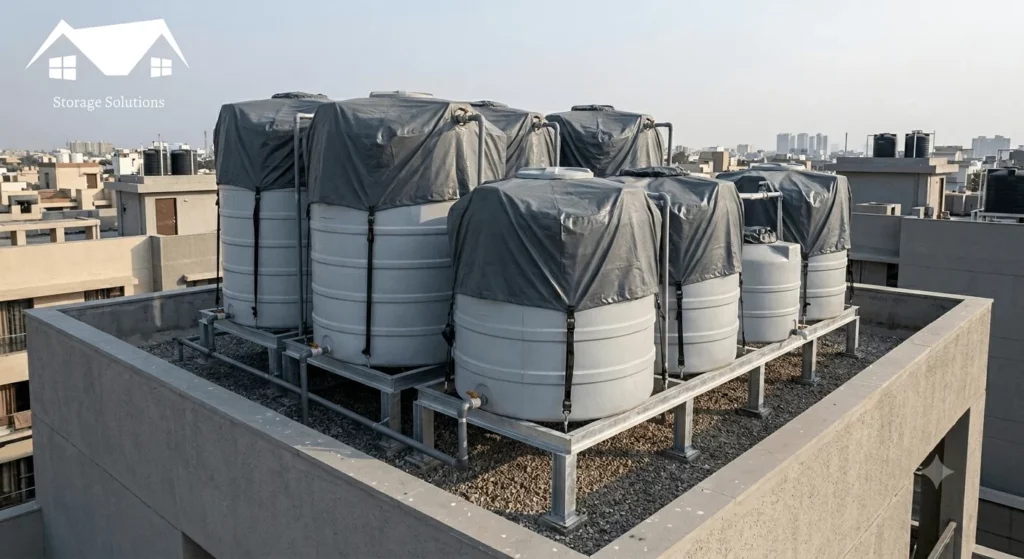
- Outdoors (If Necessary): If indoor storage isn’t possible, choose a dry, level outdoor spot. Elevate the tank on a stand or solid blocks to keep rodents and insects away. For example, rooftop placement on a stable platform is common in India. When storing outdoors, always cover the tank securely. Use a durable tarp or fitted cover to shield it from rain, dust, and sun. Ensure the cover is tightly fastened so wind won’t blow it off. The image below shows outdoor roof tanks; note the importance of stable supports and covering to protect the tanks.
- Ventilation: Whether indoors or outdoors, keep vents and access points covered with fine screens. Proper ventilation prevents moisture buildup while still blocking insects.
- Avoid extreme conditions: Don’t store plastic tanks in direct sunlight or in freezing temperatures. Extreme heat can warp plastic and promote algae; in cold regions, freeze-thaw cycles can crack the tank.
- Ventilation: Whether indoors or out, keep vents or access points covered with screens to prevent pests. Proper ventilation prevents moisture buildup but should still block insects.
- Avoid Extreme Conditions: Do not store plastic tanks in direct sunlight or freezing temperatures (in the Himalayas, for example). Extreme heat can warp plastic tanks and promote algae. In cold regions, freeze-thaw cycles can crack tanks.
| “People focus on where to put the tank, but the location problem is usually solved in the first five minutes. What actually costs you is the drying step — a tank sealed with any residual moisture inside will look fine for weeks and then smell unusable by month two. Dry it until you are certain, not until it seems done.” – Arjun Mehta, Storage Operations Head, Store My Goods | 8 years managing 100,000+ items stored monthly |
Protecting Against Algae, Dust, and Pests
Stagnant water and open tanks attract algae, mosquitoes, and rodents. Here’s how to mitigate these risks:
- Block Light to Prevent Algae: Sunlight feeds algae growth inside tanks. Store tanks in shade or cover them with an opaque tarp, and choose UV-resistant plastic tanks if they’ll sit outdoors. Even a simple cover over the openings cuts off enough light to slow algae growth.
- Seal Tightly to Keep Dust Out: Cover the tank’s inlet and outlet with a sealed lid or cap. This prevents airborne dust and pollen from entering. A locked or heavy-duty cap also stops leaves and debris during windy or rainy days.
- Mosquito Control: In India’s monsoon season, uncovered tanks become mosquito breeding grounds. Always use fine-mesh screens on vents and fit lids securely. Sealing cracks and vents is vital; even small gaps can let mosquitoes (and other pests) in. If storing water before use, consider adding a safe larvicide tablet.
- Rodent and Bird Deterrence: Rodents and birds can contaminate tanks with droppings or carcasses, posing serious health hazards. Prevent this by:
- Keeping lids on and fully closed. Inspect and patch any cracks or holes in the tank body.
- Using stainless-steel mesh screens on all inlets, outlets, and overflow pipes.
- Maintaining your roof and gutters so leaves or nests don’t enter the tank (as Safe H2O advises).
- Removing any standing water around the tank base (no puddles where mosquitoes breed).
- Keeping lids on and fully closed. Inspect and patch any cracks or holes in the tank body.
According to water tank hygiene experts, installing lids and vent covers is crucial: “Install a lid and vent cover to prevent debris, insects, and animals from entering”.
- Regular Checks: Even in storage, inspect the tank monthly. Look for cracks, loose fittings, or signs of animal gnawing. Early detection of issues prevents costly damage later.
Seasonal Water Tank Care and Long-Term Maintenance
Proper maintenance is ongoing, even when the tank is idle:
- Quarterly Inspections: Every 3–4 months, check the tank’s exterior and internals (if accessible). Look for cracks, leaks, or any signs of contamination.
- Re-Cleaning Before Reuse: If the tank will store water again after months, repeat the cleaning cycle (drain, scrub, disinfect) to ensure hygiene. Biannual cleaning is a good rule for active tanks.
- Protect During Off-Season: In summer, shading prevents overheating and algae. In winter (northern areas), empty the tank to avoid water freezing and cracking the plastic.
- Maintain Surroundings: Keep the storage area clean. Clear vegetation and waste near the tank to reduce pests. Trim branches that could fall on the tank or overhead wires that could snag covers.
By practicing seasonal tank care, you ensure the tank is ready when needed. Even in storage, sealing and ventilating properly (with screens) keeps the tank dry and pest-free.
When to Consider Professional Storage Services
If you don’t have a garage, basement, or covered outdoor spot to store a water tank safely, professional storage solves the space problem without the upkeep. Store My Goods’ household storage plans are built for exactly this: bulky household items like water tanks, alongside furniture and appliances, kept in a monitored facility instead of taking up space at home.
- Climate-Controlled Warehouses: Keeps tanks away from extreme heat, humidity, and pests.
- Security: 24×7 surveillance, sealed premises, and staff ensure your tank is safe and inaccessible to rodents or vandals.
- Pickup & Delivery: Many storage companies offer door-to-door pickup. Your empty tank can be collected and returned when needed, saving you effort.
- Short-Term Flexibility: Month-by-month plans let you store seasonally (e.g., monsoon or renovation) without a long contract.
The storage plans starting at just Rs. 499 per month.
| Plan | Starting Price | Best For |
| Standard (shared) | ₹499/month | A single tank or a few household items, budget-friendly |
| Private (lockable) | ₹100/sq ft/month | A tank plus other valuables that need a dedicated, secure space |
| Business | Custom quote | Builders, RWAs, or vendors storing multiple tanks or bulk fittings |
For example, Store My Goods advertises “secure, clean, and convenient storage services for urban households”storemygoods.com. They emphasize that items remain “safe and accessible” thanks to their tech-enabled storage systems. Such professional services can be a hassle-free solution during renovations, relocations, or extended travel.
Frequently Asked Questions
How often should I clean a stored water tank?
Clean a water tank every 6 months if it is in active use, and immediately before refilling if it has been sitting empty for an extended period. Tanks left in storage for more than 6 months should be re-cleaned – drained, scrubbed, and disinfected – before being put back into service.
Can a water tank be stored outdoors in India?
Yes, but it must be elevated on a stand or solid blocks, covered with a securely fastened tarp or fitted cover, and kept out of direct sunlight where possible to prevent algae growth and UV damage to plastic tanks. Indoor or covered storage is preferable when available.
What happens if a water tank is not cleaned before storage?
An uncleaned tank left in storage can develop algae, bacterial growth, and foul odours, and may require a more intensive cleaning cycle before it is safe to use again. In some cases, prolonged neglect can lead to structural damage from sediment buildup.
Is it safe to store an empty plastic water tank for several months?
Yes, as long as it is cleaned and fully dried before storage, kept away from direct sunlight and freezing temperatures, and sealed with a lid or cover to keep out dust, insects, and pests. Quarterly inspections during the storage period are recommended.
Can Store My Goods store a water tank along with other household items?
Yes. Store My Goods’ household storage plans accommodate bulky items like water tanks alongside furniture and appliances, with doorstep pickup, climate-aware warehousing, and risk coverage included. Plans start from ₹499/month for shared Standard storage or ₹100/sq ft/month for a Private unit.
Conclusion
A clean, well-sealed, properly located tank is the difference between safe water on day one of reuse and a contaminated tank that needs a full re-clean before it’s usable again. Follow the five-step cleaning routine before every storage period, choose a covered or elevated spot over an exposed one, and check the tank quarterly even while it’s idle. If you don’t have anywhere safe to put it, that’s exactly the gap professional storage is built to fill.
Explore Store My Goods’ household storage plans and get a free, no-obligation quote today.




 A-23, A-Block, Sector 83, Noida Pin Code - 201305
 +91 9311806600
 contact@storemygoods.in
 Hours: 9:30AM - 8:00PM
No Comment