
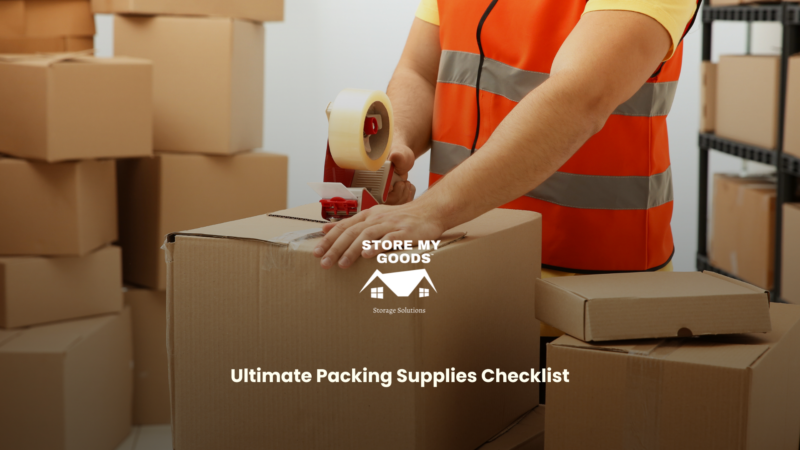
Packing Supplies Checklist for Relocating or Moving in India
|
Quick answer: For a typical home move in India, you need sturdy cardboard boxes, packing tape, bubble wrap, stretch film, furniture protection, and labelling supplies. A DIY 1BHK move usually needs ₹1,000–₹1,500 in packing materials, while a 2BHK typically costs ₹1,500–₹2,500. If you use Store My Goods, three-layer protective packing with bubble wrap, corrugated sheets, and stretch film is included with doorstep pickup. |
A stress-free move comes down to one thing: having the right materials before moving day, not during it. This checklist covers everything you need to pack a home move in India – sturdy boxes, tape, protective wrap, and the labelling tools that keep unpacking simple.
Everything on this list is what you need if you’re packing yourself. If you’d rather skip the shopping trip, Store My Goods includes three-layer protective packing – bubble wrap, corrugated sheets, and stretch film – with every doorstep pickup at no extra cost. Use this checklist either way: to buy smart if you’re doing it yourself, or to know exactly what “professional packing” should actually include when you’re not.
Essential Packing Materials
These are the must-have basics to get started with packing your home. Without these, you won’t get far in your moving process:
- Sturdy Cardboard Boxes: Invest in a variety of strong, corrugated boxes to hold your household items – small boxes for heavy items like books, medium or large for lighter items like linens. Using proper moving boxes ensures your belongings stay well-protected during transit. Avoid used cartons that might break; quality matters when it comes to moving boxes.
- Packing Tape (with Dispenser): Durable packing tape is essential for sealing boxes securely. Have plenty of tape rolls on hand – you’ll likely need more than you expect. Opt for high-quality tape so boxes don’t burst open; cheap tape can fail and you’ll end up using extra layers. A tape dispenser can be a big help for quick sealing without losing the tape end each time.
- Scissors or Box Cutter: Keep a sharp pair of scissors or a utility knife at the ready for cutting tape and opening boxes. A sturdy cutter makes it easy to break down boxes or slice through packing materials efficiently.
Protective Supplies to Avoid Damage
Once you have the essentials, gather these protective packing supplies to keep your items (especially fragile pieces and furniture) safe from damage:
- Bubble Wrap and Packing Paper: Wrap delicate items like dishes, glassware, and electronics in bubble wrap for shock protection, and use packing paper or newspaper to cushion them. These materials are essential for safe packaging for fragile items, preventing cracks or scratches. You can also fill empty spaces in boxes with crumpled paper, foam peanuts, or even old clothes to avoid any movement during transit.
- Furniture Pads & Mattress Covers: Large furniture and appliances need protection too. Use moving blankets or thick old quilts to cover furniture, shielding it from scratches and dents. If available, get a plastic wrap or specialty mattress cover for your mattress to keep it clean and dust-free. These covers prevent dirt or moisture from ruining your sofa, bed, or other bulky items while moving.
- Plastic Stretch Wrap: Stretch wrap (shrink wrap) is a versatile protective material. Wrap it around furniture pieces (like wardrobes or sofas) to hold doors and drawers in place and protect surfaces from dust and scuffs. You can also bundle together items (e.g. tying up cushions or securing loose cabinet shelves) with stretch wrap. It’s especially handy for keeping parts of disassembled furniture together so nothing gets lost.
|
“Don’t treat every item the same when packing for a move. Use rigid protection for glass and mirrors, adequate cushioning for electronics, and proper wrapping for furniture. Label every box by room and contents, and keep documents, valuables, and immediate essentials with you rather than sending them with the main shipment.”
– Store My Goods Storage Operations Team |
How to Pack Fragile and High-Value Items
Not every fragile item packs the same way, and treating them identically is how glass breaks in transit. Glass tabletops and mirrors need a cardboard sandwich – a rigid sheet on each face, taped at the edges, then a full bubble-wrap layer over that – and should always travel upright, never flat.
Showpieces, photo frames, and ceramics do better individually wrapped in tissue paper before bubble wrap, packed into a box marked FRAGILE on all four sides, not just the top. TVs and electronics should travel in their original box if you still have it, or in a double-walled box with at least two inches of cushioning on every side if not – and always upright.
Labeling & Organization Tools for Easy Tracing
Staying organized is half the battle during a move. These tools will help you clearly label everything and keep track of your items for easier unpacking:
- Permanent Markers: Clearly mark each box with its contents and the room it belongs to (e.g., “Kitchen – Utensils” or “Bedroom – Linens”). Bold, permanent ink ensures labels won’t smudge or fade, and you can read them at a glance.
- Labels or Color-Coded Stickers: You can also use sticky labels or colored stickers for quick identification. For example, assign a color to each room (red for kitchen, blue for bedroom, etc.) and stick those on the boxes – this way, anyone helping can instantly see where each box should go.
- Inventory List or Notebook: It helps to maintain a simple inventory of your boxes. Number your boxes and jot down a brief list of key items in each box in a notebook or moving app. This extra step keeps you on top of all your belongings – especially useful if you’re putting some boxes into storage or if you have multiple people moving items.
Additional Tools for a Smoother Move
- A basic tool kit (screwdrivers, pliers, Allen keys) for furniture disassembly – keep screws and bolts in a labelled bag taped to the item they belong to.
- Ziplock bags and cable ties for small parts and loose cords.
- A dolly or hand trolley for heavy boxes and furniture – most packers-and-movers crews bring one as standard, so confirm before renting your own.
- Rope, bungee cords, or ratchet straps to secure items in the vehicle.
- Heavy-duty trash bags for soft items like pillows and clothing, or as dust covers and box liners.
DIY Packing vs. a Professional Packing Service: What You Actually Need
Buying your own materials for a 2BHK move – 15–20 boxes, 3–4 tape rolls, bubble wrap, stretch film, and furniture pads – typically runs ₹1,500–2,500, before counting the time it takes to source it all.
A professional packing service folds this into the pickup: three-layer packing applied by a trained crew, at no extra cost on top of the plan. The real difference isn’t the money – it’s consistency. A crew that packs moves daily wraps a glass tabletop or wardrobe the same correct way every time; a first-time DIY packer is guessing. This matters even more if you’re storing items rather than just moving them, since goods sit in transit and storage for weeks or months instead of a single afternoon.
Ready to Skip the Shopping Trip?
Every item on this checklist – boxes, tape, bubble wrap, stretch film – is already included when Store My Goods packs your move. Our crew handles packing and moving door-to-door, and if some or all of your belongings need to sit in storage rather than go straight to the new place, the same three-layer packing standard applies – see our guide to safe storage in India for what “safe” should actually mean once your things are in a facility. For furniture storage specifically, or a full business relocation, get a free quote before you buy a single box.
Get a free quote or book online!
Packing Supplies for Moving: Frequently Asked Questions
Q: What packing supplies do I need to move a 1BHK or 2BHK home in India?
A: For a 1BHK, budget 10–15 boxes in mixed sizes, 2–3 rolls of packing tape, one roll of bubble wrap, and a roll of stretch film – roughly ₹1,000–1,500. A 2BHK typically needs 15–20 boxes and 3–4 tape rolls, closer to ₹1,500–2,500. Add furniture pads separately if you have a sofa, bed, or wardrobe travelling unprotected.
Q: How do I pack a mirror or glass tabletop for a move without breaking it?
A: Sandwich the glass between two rigid cardboard sheets taped at the edges, then wrap the whole sandwich in bubble wrap. Mark it FRAGILE on all sides and always transport it upright, never flat – flat glass under any stacked weight is a crack risk, even with padding.
Q: Do I need to buy packing materials if I hire a professional packing service?
A: No. A professional packing crew brings three-layer protective packing – bubble wrap, corrugated sheets, and stretch film – as part of the pickup, so you don’t need to source or buy anything yourself. Confirm this is included before assuming you still need a supply run.
Q: How much does packing material cost for a full house move in India?
A: A 1BHK runs roughly ₹1,000–1,500 in materials; a 2BHK runs ₹1,500–2,500; a 3BHK can run ₹2,500–3,500 depending on how much furniture needs padding. These figures cover materials only, not labour or transport.
Q: What’s the best way to pack electronics like TVs for shifting?
A: Use the original manufacturer box if you still have it – the internal foam is molded to fit the exact unit. If not, use a double-walled box with at least two inches of cushioning on every side, and always transport TVs upright, never flat, to avoid panel damage.
Q: Can I reuse old boxes for moving, or should I buy new ones?
A: Reuse is fine for lightweight items like linens or clothing, but avoid reused boxes for anything heavy like books or kitchenware – repeated flex weakens corrugated cardboard, and a box that’s already been taped and retaped once is more likely to fail under new weight.
Q: How do I pack for a move if I also plan to put items in storage?
A: Pack storage-bound items in sturdier, higher-quality boxes than you would for a same-day move, since they’ll sit longer and get handled more times. Label them by content and destination separately from moving-day boxes, and prioritise climate protection (see the safe storage guide linked below) for anything wooden, leather, or paper-based.
Q: What items should I carry with me instead of packing in boxes?
A: Keep documents, jewellery, cash, and a change of essentials (clothes, toiletries, chargers) with you rather than in the moving truck or storage shipment – these are the items most commonly needed immediately or hardest to replace if delayed or misplaced in transit.

 A-23, A-Block, Sector 83, Noida Pin Code - 201305
 +91 9311806600
 contact@storemygoods.in
 Hours: 9:30AM - 8:00PM
No Comment