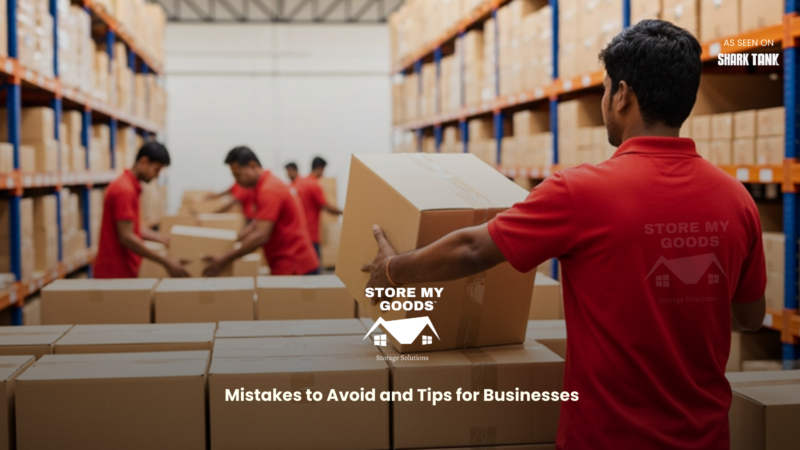
Storage Mistakes to Avoid in India: A Guide for Renters and Businesses
|
Quick answer: Whether you’re storing a spare room’s worth of boxes or a business’s inventory, get the size and the security right before you sign anything. Store My Goods’ shared storage starts from ₹499/month and dedicated private space from ₹100/sq. ft. – both with doorstep pickup, three-layer packing, and risk coverage included, and no lock-in. Businesses get custom bulk and warehouse pricing with a dedicated account manager. See the full mistake list below, or compare plans and get a quote in under 2 minutes. |
India’s self-storage market is booming – valued at USD 2.2 billion in 2024 and projected to reach USD 3.62 billion by 2034. This surge is driven by urbanization, smaller living spaces, and the need for smart, secure storage solutions in India for both personal and business use. Whether you’re an individual looking for personal storage in India or a company exploring business storage solutions, understanding the pitfalls and key considerations is crucial.
In this article, we combine two perspectives: common mistakes to avoid when renting personal storage space, and what businesses should know before choosing a storage facility. By avoiding these mistakes and following best practices, you can ensure your belongings remain safe, while enjoying flexibility, affordability, and tech-enabled convenience.
How Much Does Storage Cost in India?
Neither half of the original article states a price, which is the single biggest reason a convinced reader still doesn’t book. Store My Goods prices storage on a simple, transparent structure with no lock-in:
● Shared storage – starting from ₹499/month, cost-effective for households storing 10–20 boxes’ worth of seasonal items, documents, or spare furniture, with risk coverage bundled in at zero extra cost.
● Private, dedicated space – starting from ₹100/sq. ft./month, for anyone who wants a locked, single-tenant unit instead of shared space, sized to whatever volume they’re clearing out.
● Business/bulk storage – custom pricing quoted per pallet or per square foot for inventory, document archiving, or warehouse overflow, with GST-compliant billing and a dedicated account manager included at every tier.
All plans, personal or business, include doorstep pickup, three-layer protective packing, and month-to-month billing with no lock-in. Exact rates vary slightly by city – view live pricing for Mumbai as a reference, or book your storage online to get a quote for your city in under 2 minutes.
Which Storage Type Fits You? A 60-Second Decision Guide
Every mistake in this article traces back to picking the wrong storage type before checking the actual need. A simple rule cuts through it:
● Under 15–20 boxes’ worth of seasonal or overflow household items – the classic personal-storage case – shared storage at ₹499/month covers it, and overfilling stops being a risk because the unit is sized correctly from the start.
● Higher-value items, documents, or anything you don’t want shared with other customers’ goods – Private storage at ₹100/sq. ft. solves the security and access-control mistakes directly, since each unit gets its own dedicated CCTV zone.
● Businesses evaluating a facility should apply a different filter: pay-as-you-store scaling (no fixed floor space locked in for a full year), climate control if inventory includes electronics or fabric stock, and a digital dashboard for real-time inventory tracking rather than a manual logbook – three checks that eliminate most of the facility-selection mistakes SMEs make when signing their first warehouse contract.
Common Mistakes to Avoid When Renting Personal Storage Space
For individual renters: Personal storage is a lifesaver when you’re decluttering, moving, or renovating – but first-time renters keep stumbling into the same avoidable errors.
1. Choosing the Wrong Unit Size
A unit that’s too small becomes cramped and can damage items; one that’s too large means paying for unused space. A rough guide: a 1BHK’s worth of boxes typically needs 30–50 sq. ft. of dedicated space, or a few dozen boxes’ worth of shared storage. How to avoid it: take inventory of your items first, and confirm exact sizing during a free quote rather than guessing – it’s better to slightly overestimate than need a second unit.
2. Neglecting Security and Insurance
A reputable facility should have CCTV surveillance, gated access, secure locks, and lighting. Pro tip: choose a provider where risk coverage is included by default rather than sold as an add-on – Store My Goods bundles comprehensive risk coverage into every plan at zero extra cost, alongside 24/7 CCTV and biometric access at its facilities.
3. Poor Packing and No Climate Control
Improper packing can ruin electronics, artwork, clothing, or furniture. Fix it: use sturdy boxes and bubble wrap, or use a provider whose pickup team wraps items in three-layer, pressure-and-jerk-resistant packaging as standard – built for India’s roads, not just the last mile.
4. Overfilling and Disorganization
Overstuffed units lead to broken items and frustration during retrieval. Solution: leave walkways, store heavier or seasonal items at the back, and use a provider that catalogues every box individually with a QR code, so you’re never digging through unmarked stacks to find one item.
5. Not Labeling Boxes or Keeping Inventory
Opening multiple unmarked boxes wastes time and risks damage. Fix: label every box clearly and keep a written or digital inventory – Store My Goods assigns a QR code to every box at pickup and gives you a live digital inventory portal, so you can request a specific item back without unpacking everything else.
6. Forgetting Access Details and Rules
Assuming 24/7 access or missing hidden fees is a common issue. What to do: always check retrieval timelines, lock-in terms, and cancellation policy before booking. Store My Goods has no minimum lock-in and no hidden fees, and most metro-city retrievals arrive within 24–48 hours of request – see the full policy on the FAQs page before you book.
7. Storing Prohibited or Perishable Items
Avoid putting food, hazardous items, or perishable goods in storage. Pro tip: stick to non-perishables and durable goods, and check your provider’s restricted-items list – listed on the FAQs page – before you pack.
| “Before booking storage, check the size you actually need, the security and risk coverage provided, and how your items will be packed and tracked. Avoid overfilling, label every box, and confirm access rules, retrieval timelines, cancellation terms, and restricted items before sending your belongings to storage.” – Store My Goods Storage Operations Team |
What Businesses Should Know Before Choosing a Storage Facility
For startups, e-commerce sellers, and enterprises: choosing the right business storage solution can cut overheads and add agility that a fixed warehouse lease can’t. Here’s what to check.
Security and Monitoring
Confirm the facility offers 24/7 surveillance, guard patrols, pest control, and fire-safety systems, and that insurance coverage is included rather than a separate line item. Store My Goods runs CCTV-monitored, fire-detection-equipped warehouses with comprehensive risk coverage on every item from the moment of pickup.
Location and Accessibility
Choose a warehouse close to your office or delivery zones to save on logistics. Look for vehicle-friendly zones with dedicated loading bays and flexible access hours – preferably 24/7. Store My Goods operates in 75+ Indian cities, including full coverage in Mumbai.
Flexibility and Scalability
Pick a provider that lets you scale space as needed without a long-term lock-in. Pay-as-you-store plans suit startups, seasonal sellers, or growing teams that can’t predict next quarter’s inventory volume.
Climate-Controlled Storage and Cleanliness
If you’re storing electronics, records, or fabrics, climate control is a must. Confirm the facility is clean, well-ventilated, pest-free, and offers loading/unloading assistance – don’t take “climate-controlled” on a brochure at face value without asking how it’s monitored.
Tech and Value-Added Services
Modern providers offer digital dashboards for inventory tracking, app-based pickup requests, and business relocation support. Look for value-added services like packing, professional transport, and last-mile delivery if you’re relocating offices – see packing and moving support for how that’s typically bundled.
Transparent Pricing and Reputation
Choose providers with clear billing, no hidden charges, and reviews from other businesses – not just consumer reviews. Store My Goods is rated 4.8★ by 10,000+ customers. The cheapest deal isn’t worth it if it compromises on safety or service quality; see the pricing section above for what transparent billing actually looks like.
Why Store My Goods for Personal and Business Storage
Neither half of the original article gives a reader any reason to trust the advice comes from an operator that has solved these problems at scale:
● 7M+ items stored, with a 99.2% secure-delivery record across three-layer, pressure-and-jerk-resistant packaging.
● 24/7 CCTV surveillance, biometric access, and fire-detection systems at every facility.
● Comprehensive risk coverage included on every item from the moment of pickup – no separate policy needed – directly addressing mistake #2 above.
● 4.8★ rating from 10,000+ customers, and featured on Shark Tank India.
● No lock-in – store for one month or several years, cancel or retrieve any time with notice.
Explore Self Storage or Household Storage for personal plans, Business Storage or Warehouse Storage for commercial needs, or read how other businesses cut costs in 5 Warehouse Problems Every Business Faces – and Their Solutions.
Frequently Asked Questions About Storage in India
How much does storage cost per month in India?
Store My Goods’ shared storage starts from ₹499/month, and private, dedicated space starts from ₹100/sq. ft./month. Business and bulk storage is custom-quoted based on volume and duration. All plans include doorstep pickup, three-layer packing, and risk coverage, with no separate insurance to buy and no lock-in period.
What size storage unit do I need for a 1BHK or 2BHK?
A 1BHK’s worth of overflow items typically needs 30–50 sq. ft. of private space, or shared storage sized to roughly 10-20 boxes. A 2BHK usually needs 50–80 sq. ft. of private space. Exact sizing depends on furniture versus boxes – get a free volume assessment during booking rather than estimating.
Is my stuff insured while it’s in storage?
Yes. Every item is covered under comprehensive risk coverage from the moment of pickup, included in every plan at zero extra cost – there’s no separate insurance policy to buy or manage.
Can businesses store inventory without signing a long-term lease?
Yes. Store My Goods’ business plans are pay-as-you-store with no fixed-term lock-in, quoted per pallet or square foot. This suits startups and seasonal sellers who can’t commit to a fixed warehouse footprint a year in advance.
What items are not allowed in self storage?
Food, perishables, hazardous or flammable materials, and illegal items cannot be stored. Stick to non-perishable, durable goods – the full restricted-items list is available on the FAQs page before you book.
How does doorstep pickup work, and how fast can I get an item back?
You book a pickup slot online or via the app, and the team arrives to pack items in three-layer protective packaging and assign each box a QR code. Most metro-city pickups happen within 24 hours of booking, and retrievals of specific boxes typically arrive within 24–48 hours in metro cities.
Is climate-controlled storage available for electronics or documents?
Yes. Store My Goods’ warehouses are climate-monitored and suitable for electronics, documents, and fabric-sensitive items, in addition to standard CCTV surveillance and fire-detection systems.
Which cities does Store My Goods operate in?
Store My Goods operates in 75+ Indian cities, with core hubs in Mumbai, Delhi NCR, Bengaluru, Hyderabad, Pune, Noida, and Gurugram, extending to Chennai, Ahmedabad, Coimbatore, Lucknow, and more.
Conclusion
Whether you’re a household clearing a spare room or a business outgrowing its office storeroom, secure storage gives you freedom from space constraints – but only if you avoid the mistakes above. In short, that means:
● Planning ahead and sizing the unit to the actual volume, not a guess
● Choosing a facility with security, insurance, and climate control built in, not sold separately
● Labeling and cataloguing everything so retrieval doesn’t become a search
● Working with a provider whose pricing and policies are stated upfront, not buried in fine print
For businesses, outsourcing storage means avoiding real estate investment, reducing clutter, and improving supply-chain flexibility. Store My Goods offers exactly that, with plans starting at ₹499/month and no lock-in, across 75+ Indian cities. Explore Store My Goods plans or get a free quote in under 2 minutes.


 A-23, A-Block, Sector 83, Noida Pin Code - 201305
 +91 9311806600
 contact@storemygoods.in
 Hours: 9:30AM - 8:00PM
No Comment